‹
›
‹
›
Detailed Dimensional Range for C92500 Rods
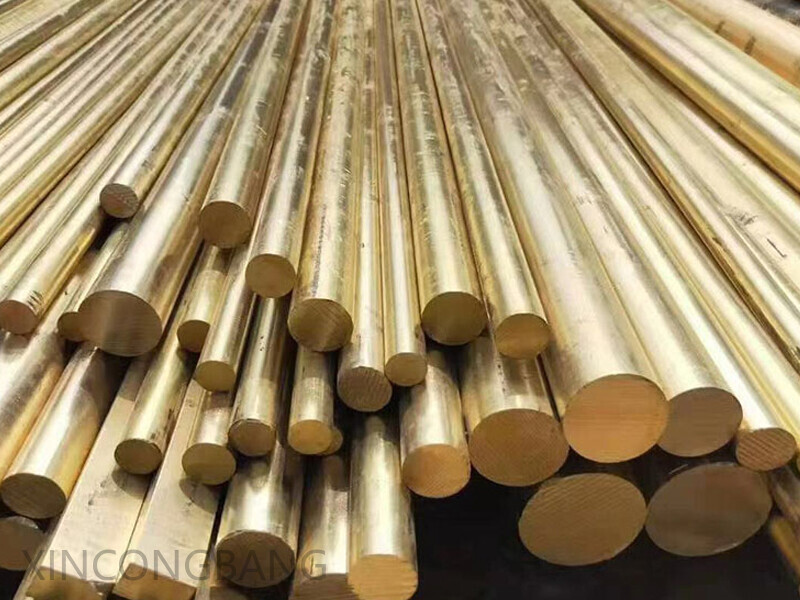
C92500 rods are available in a wide range of sizes to meet diverse industrial needs. Specifications vary based on manufacturing methods (e.g., centrifugal casting, cold drawing) and surface treatments:
Note: Tolerances for diameter, straightness, and roundness adhere to stringent industrial standards, ensuring consistency in high-precision applications.
International Standards for C92500 Copper Rods
C92500 is governed by the following key standards:
- ASTM B505/B505M-2005: Specifies requirements for continuous cast copper alloy rods, including chemical composition, mechanical properties, and dimensional tolerances .
- EN 12163:2011: European standard for copper alloy rods, covering general-purpose applications and quality assurance protocols .
- JIS H 3250-1992: Japanese industrial standard for copper alloy rods and bars, addressing dimensional accuracy and testing methods .
Key Compliance Criteria:
- Chemical Composition: Strict adherence to Cu, Sn, Pb, and trace element limits .
- Mechanical Properties: Tensile strength, elongation, and hardness must meet specified thresholds.
- Surface Integrity: Defect-free surfaces with controlled roughness and dimensional accuracy .
C92500 is a high-tin leaded nickel-tin bronze with the following chemical composition ranges :
Notes:
- The alloy conforms to ASTM B505/B505M-2005 for continuous castings .
- Variations in Sn content (e.g., ~9% Sn in some reports ) reflect specific manufacturing tolerances or application-driven modifications.
Mechanical Properties of C92500 Copper
C92500 exhibits a balanced combination of mechanical strength, wear resistance, and corrosion stability, making it suitable for demanding environments. Key properties include:
1. Tensile Strength
- Ultimate Tensile Strength (UTS): 275–300 MPa .
- Yield Strength (0.5% Offset): ~140 MPa (typical for as-cast conditions; increases with heat treatment) .
2. Elongation
- Elongation at Break: ~30% (indicating moderate ductility for a high-strength bronze) .
3. Hardness
- Brinell Hardness (HB): ~65 HB (500 kg load) .
4. Fatigue and Creep Resistance
- Fatigue Strength: ~76 MPa (10⁸ cycles, rotating beam test) .
- Creep Strength:
- 110 MPa at 177°C (350°F) .
- 43 MPa at 288°C (550°F) .
5. Machinability
- Rated at 30% FMB (Free Machining Brass scale), improved by lead (Pb) content for smoother cutting operations .
6. Thermal and Electrical Properties
- Thermal Conductivity: Moderate (lower than pure copper due to alloying elements).
- Electrical Conductivity: ~15% IACS (suitable for electrical contacts but not high-current applications) .
Production process and product advantages of C92500 copper rod:
1. Production process
Raw material processing and smelting
Using waste brass, waste copper, zinc ingots, etc. as raw materials, after sorting, they are smelted in an industrial frequency furnace or a large-tonnage electric furnace to produce copper liquid. During the smelting process, the submerged liquid transfer technology is used to reduce metal loss, and a bag dust removal system is used to reduce smoke pollution.
Some processes add nickel as a strengthener and phosphorus as a deoxidizer to improve material properties.
Continuous casting and molding
The copper liquid enters the continuous casting link through the insulation furnace. Using multi-head multi-stream horizontal continuous casting technology, multiple copper rods of different specifications can be produced at the same time, and the efficiency is more than 10 times higher than that of traditional processes.
After molding, the density and surface finish of the material are improved by hot extrusion and skinning.
Subsequent processing
Including annealing (eliminating internal stress), polishing (removing surface debris), sawing, straightening and other steps. Some processes use red punching (800℃ heating and stamping) and sandblasting to remove oxide scale.
The mainstream domestic production process adopts extrusion method, combined with continuous casting and automation technology to ensure that the product performance reaches the international advanced level.
2. Product advantages
Excellent mechanical properties
Tensile strength is about 275-300 MPa, high yield strength, good ductility and fatigue strength, suitable for high-load parts such as gears, bearings, etc.
Excellent processing performance
The lead-containing design significantly improves the cutting performance, and the processing efficiency rating (FMB) is increased from 20% to 30%, which is convenient for use with hardened steel parts.
Wear resistance and corrosion resistance
As a tin bronze alloy, C92500 has high hardness and wear resistance, and is suitable for manufacturing wear-resistant parts such as copper sleeves and bushings.
It shows good corrosion resistance to medium-concentration sulfuric acid, chloride ion environment and acetic acid.
Wide application fields
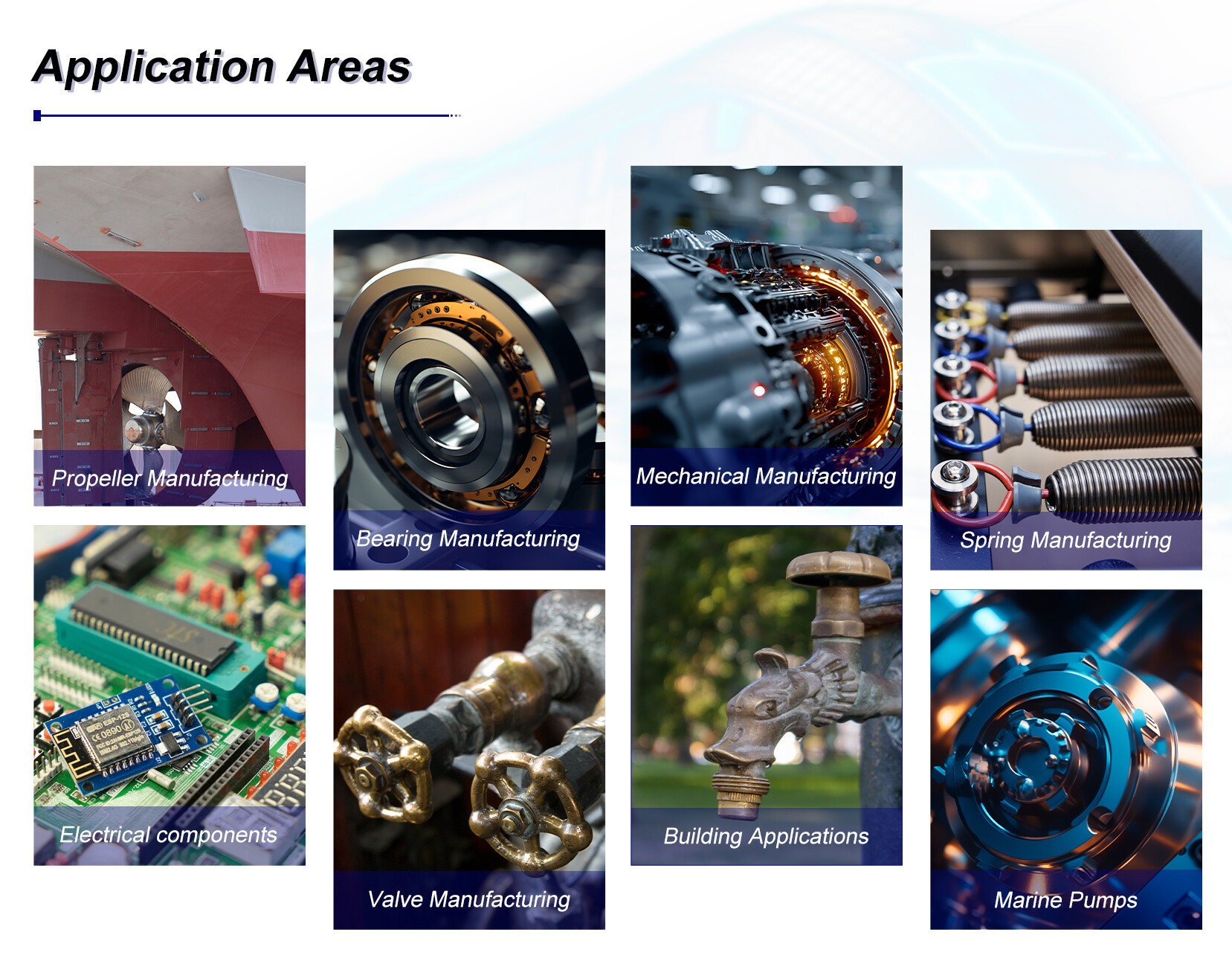
Used in petrochemical, shipbuilding, machinery, power and other industries, it can be processed into flanges, valves, heat exchanger pipe fittings, etc.
Environmental protection and efficient production
The scrap copper recycling and smelting technology is adopted, and the dust removal system is equipped to reduce the dust emission to only 1/5 of the national secondary standard, realizing resource recycling.
The continuous and automated process reduces energy consumption, and a single device can produce 64 copper rods at the same time, greatly increasing production capacity.
Q1:Do you provide samples? Is it free or extra?
A1:Yes, we can provide samples free of charge and the customer will pay the freight.
Q2:What if I don't have export experience ?
A2:We have reliable forwarder agent which can ship items to you by sea/air/Express to your doorstep. Any way, we will help you choose the most suitable shipping service.
Q3:How long is your lead time?
A3:If it is in stock, it is usually 5-10 days. Or, if there is no inventory, 15 days, depending on the quantity.
Q4:What are your terms of payment?
A4:30% T/T deposit in advance, 70% T/T balance within 5 days after B/L copy, 100%.Irrevocable L/C at sight, 100% Irrevocable L/C after receive B/L 30-120 days, O/A.
Q5:How is your technical support?
A5:We provide lifetime online support through Whatsapp/ Skype/ Wechat/ Email. Any problem after delivery, we will offer you call anytime.
Welcome To Your Inquiry
What can we help you?